Sixteenth note notation brings in some new symbols. Where quarter notes have a stem, and eighth notes have a stem with a tag, sixteenth notes have a stem and two tags. Combinations of eighth and sixteenth notes can be beamed together and the double tag or beam helps you identify which duration is which.
The list of eight rhythms below can be mapped to rhythm words you’ve seen in the past in terms of gestures, so none of the actual sequence of down and upstrokes will be new. It’s just that now, they all fit into one beat instead of two.
In order, this is how you’d name each of the rhythms:
- One quarter note
- Two eighth notes
- Four sixteenth notes
- Two sixteenths and an eighth
- An eighth and two sixteenths
- Sixteenth, eighth, sixteenth
- Dotted eighth and sixteenth
- Sixteenth and dotted eighth.
Look at each figure and make sure that your understanding correlates and that you can see the double tag for sixteenths.
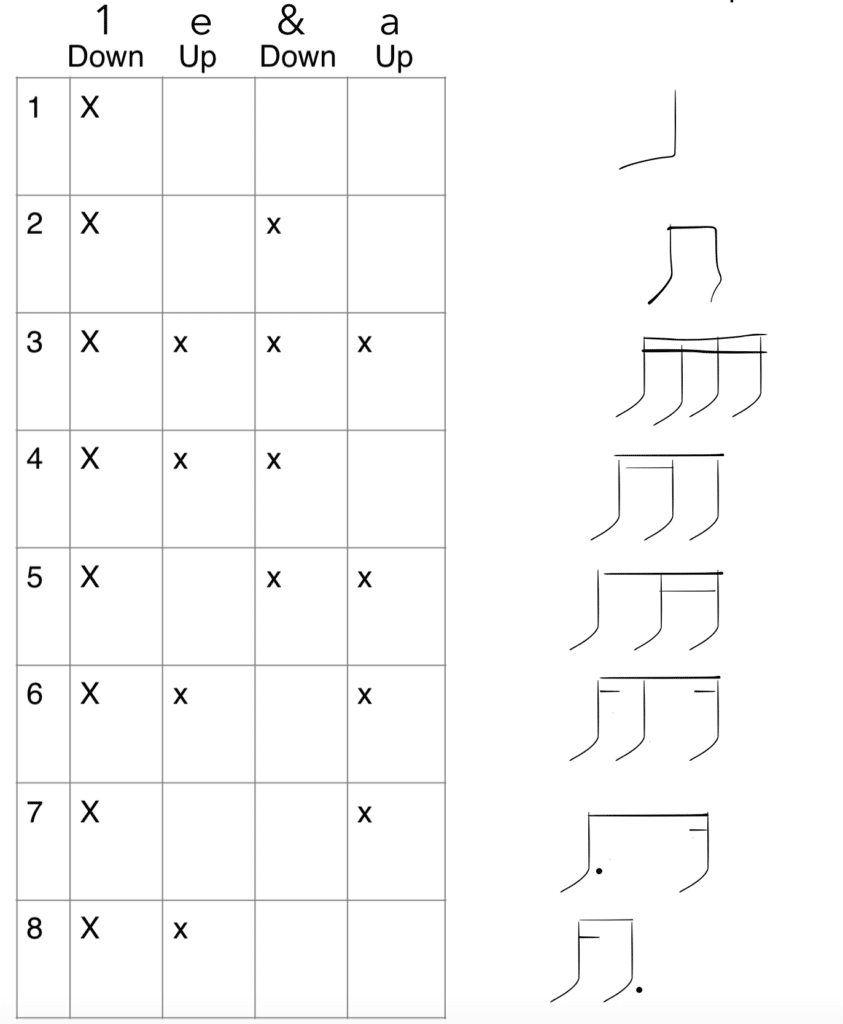
Ultimately, we want to play any of these in any order.
The most efficient way to learn to read and play these effortlessly is to take a small number first and get used to them. To begin with, play each one individually with the correct sequence of down and up strokes.
Then take the swamp of rhythms or equivalent bit of paper and starting with the first three rhythms 1-3, write one down in each box in any order. You’ll end up with two bars of rhythm per line. Work on playing through that line at slow tempos using the guide tracks. Gradually push the tempo up until you can read and play your line of rhythm a bit faster, say 80-100bpm. Then move on to the next three.
Look in the materials tab above for a downloadable version to fill in, along with some examples of song sections that use sixteenth note strumming.